
Samsung Galaxy Y
Samsung Galaxy | Wednesday, November 30, 2011
Galaxy Nexus

The Galaxy Nexus was unveiled at Google and Samsung's Ice Cream Sandwich event on 19 October, 2011 in Hong Kong. It was released on November 17, 2011.
Hardware:
The Galaxy Nexus features a 4.65-inch 1280×720-pixel HD Super AMOLED PenTile curved glass display a dual-core 1.2 GHz TI OMAP 4460 processor (ARM Cortex-A9) with an accompanying PowerVR SGX540, GB of RAM. The processor can run from 1.2–1.5 GHz, but is
underclocked at 1.2 GHz for smooth performance. However, it can easily
run at 1.5 GHz once rooted (see Texas Instruments OMAP). Additionally, a 1,750 mAh battery, 1.3 MP front camera and 5 MP rear camera (with zero shutter lag) capable of 1080p video, 4G, Wi-Fi a/b/g/n, Bluetooth, GPS, barometer, and NFC and it has 16 or 32 GB of internal memory.
The Galaxy Nexus also hosts support for MHL through the use of its Micro USB 2.0 port. This means that the Galaxy Nexus has the ability to output up to 1080p audio-visual content (through HDMI) to any supported external display such as HD Television
The Galaxy Nexus has no physical buttons on the front, but instead features on-screen soft keys embedded into the system software (part of Android 4.0). Beneath the soft keys, a multicolored notification LED is featured, a feature missing from the Nexus S.
The 3.5 mm headphone jack
is located on the bottom of the phone, and the camera is located in the
center of the rear side. The phone will have 16/32 GB internal storage
depending on model.
#from http://en.wikipedia.org
Samsung Stratosphere

The Stratosphere is a dual-band EV-DO Rev A (850/1900MHz) and 750MHz
4G LTE device with 802.11a/b/g/n Wi-Fi. Verizon says to expect download
speeds around 5 to 12Mbps, and upload speeds between 2 and 5Mbps on its
4G network. The Stratosphere hit those speeds without a hitch, pulling
in numbers equal to the Motorola Droid Bionic ($299.99,
4.5 stars) in a series of head-to-head tests; both phones averaged
around 5Mbps down and 3.5Mbps up. You can also use the Stratosphere as a
mobile hotspot with the appropriate plan to provide a Wi-Fi connection
for up to eight devices.
Voice quality is very good. Reception is average, and incoming calls
sound rich and clear, with volume that can go very loud. On the other
end, calls made with the phone are equally clear and feature excellent
background noise cancellation. The speakerphone sounds good, though it's
a little low for outdoor use. Calls sounded clear and natural through
a Jawbone Era Bluetooth headset ($129, 4.5 stars) and voice dialing worked accurately.
Battery life is still not a strong point for 4G LTE devices.
Streaming content over 4G, the Stratosphere lasted for just 2 hours and
47 minutes. That's not great, but it's about average for now. Talk time
was better, at 6 hours and 14 minutes.
Samsung Exhibit 4G
 In it you will find a 1GHz processor, 3-megapixel camera with flash, front-facing VGA shooter for self-portraits and video chat, mobile Wi-Fi, full HTML browser with Flash, memory card slot, USB tethering, and support for + T-Mobile's HSPA network. If you are bored, you can watch live TV and on-demand service from T-Mobile TV, download movies and TV programs from the Samsung Media Hub. There are also a variety of games that are already installed such as Bejeweled 2, Scrabble and Doodle Jump.
Samsung Galaxy W

Samsung Galaxy S II

The Galaxy S II has a 1.2 GHz dual-core "Exynos" system on a chip (SoC) processor, 1 GB of RAM, a 10.8 cm (4.3 in) WVGA Super AMOLED Plus screen display and an 8 megapixel camera with flash and full 1080p high definition video recording. It is one of the first devices to offer a Mobile High-definition Link (MHL), which allows up to 1080p uncompressed video output with HDMI while charging the device at the same time. USB On-The-Go (USB OTG) is supported.
The user-replaceable battery on the Galaxy S II gives up to ten hours of heavy usage, or two days of lighter usage. Samsung claims that talk time is 9 hours on 3G and 18.3 hours on 2G.
#from http://en.wikipedia.org
Samsung Galaxy S

The Samsung Galaxy S features a PowerVR graphics processor, yielding 20 million triangles per second, making it the fastest graphics processing unit in any smartphone at the time of release. Also, upon release, the Galaxy S was both the first Android phone to be certified for DivX HD, and at 9.9 mm was the thinnest smartphone available.
As of January 2011, Samsung had sold 10 million Galaxy S phones globally. The Galaxy S was named the European Smartphone of the Year at the European Imaging and Sound Association (EISA) Awards 2010–2011. Samsung Galaxy S was succeeded by Samsung Galaxy S II. In October 2011, Samsung announced that it had sold 30 Million Galaxy S and Galaxy S II phones globally.
#from http://en.wikipedia.org
Samsung Galaxy R

Samsung Galaxy Prevail

The Prevail comes with an 800MHz single-core processor, 3.2-inch 320x480
capacitive display, a 2 megapixel rear camera, Wi-Fi, Bluetooth, GPS,
and launched with Android 2.2 Froyo. Great value for the money.
Samsung Galaxy Mini
Features:
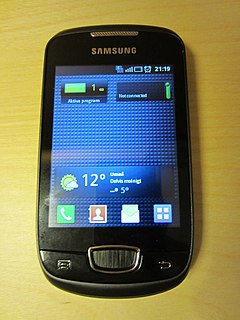
The Galaxy Mini is a 3.5G smartphone that offers quad-band GSM and announced with two-band HSDPA (900/2100 MHz) at 7.2 Mbit/s. The display is a 3.14-inch (80 mm) TFT LCD capacitive touchscreen of vertical QVGA
(240x320) resolution. There is also a 3-megapixel camera, capable of
recording videos at QVGA (320x240) resolution. The Galaxy Mini comes
with a 1.2 Ah Li-ion battery. The Galaxy Mini runs on Android 2.2 Froyo.
Galaxy Mini is presented as a entry-level smartphone, and is (as of 13 May 2011) one of the cheapest Android phones around.
In May 2011, Samsung announced
that the Galaxy Mini (along with other Galaxy models) will get an
official upgrade to Android 2.3. As of November 2011 the rollout is
still in progress. If voiding the warranty is not a concern then a
leaked upgrade can be applied already.
#from http://en.wikipedia.org
Samsung Galaxy Gio

It was announced at the 2011 Mobile World Congress as one of four Samsung low-end smartphones, along with the Galaxy Ace, Galaxy Fit and Galaxy mini.
In early August 2011, Samsung officially rolled out the Gingerbread update via Kies. In September 2011, Samsung rolled out an update in The Netherlands marked "PDA:KPS PHONE:KPA CSC:KP1 (XEN)"
Features:
The device is equipped with a 3.2 inches (8.1 cm) HVGA screen, a three-megapixel camera and an 800 megahertz processor. It runs on Android 2.2, with Samsung's TouchWiz user interface.
#from http://en.wikipedia.org
Samsung Galaxy Fit

It was announced at the 2011 Mobile World Congress as one of four Samsung low-end smartphones, along with the Galaxy Ace, Galaxy Gio and Galaxy mini
Features:
The device's is equipped with a 3.3 inches (8.4 cm) QVGA screen, a 5-megapixel camera and a 600 megahertz processor. The Fit runs on Android 2.2 Froyo and a modified version of TouchWiz, Samsung's proprietary user interface. The Galaxy Fit also has a Swype option which allows you to draw lines from letter to letter in order to type.
#from http://en.wikipedia.org
Samsung Galaxy Skin
 Based on the International Business Times, or IBT, smart phone device manufacturers from South Korea will launch Galaxy Skin in the second quarter of 2012. According to news circulating today, the Samsung Galaxy Skin that will come with a 1.2GHz processor will be equipped with a specification of flexible AMOLED screen is 4 inches with a resolution of 800 × 480, 8MP camera that comes with auto focus, self shot, action shot, Panorama shot, stop motion, smile shot and Add Me feature, and a VGA front camera.
Besides Samsung Galaxy Skin will also be supported by 1GB of RAM, 1500 mAh Battery, Network 3.5G (GSM / GPRS / EDGE): 850/900/1800/1900 MHz), 4G (HSDPA 7.2 Mbps, HSUPA 5.76 Mbps): 900 / 1900/2100 MHz. Like the smart phones in general, the Samsung Galaxy Skin will also feature a variety of advanced features. In this case, the Samsung Galaxy Skin will be equipped with a message using the Social Integration Hub, Android Market, A-GPS, the application of Augmented Realty: Realty Screen Browser, SMS, MMS, Email, Video messaging, Exchange ActiveSync.
Samsung Galaxy Ace
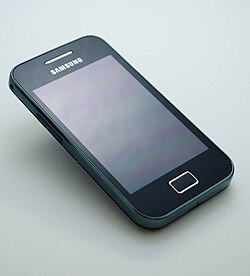
The Galaxy Ace is one of the four budget, low-cost Android-based smartphones planned by Samsung. Being an upper mid-range smartphone, the Ace has a hardware between that of the Galaxy 3 and the Galaxy S; it features an 800 MHz Qualcomm MSM7227 processor with the Adreno 200 GPU.
It is currently available in black with back covers in two different colors, black and white.
Features:
The Galaxy Ace is a 3.5G smartphone, offers quad-band GSM and
announced with two-band HSDPA (900/2100) at 7.2Mbps. The display is a
3.5 inch TFT LCD capacitive touchscreen of HVGA (320x480) resolution.
There is also a 5-megapixel camera with LED flash, capable of recording
videos at QVGA (320x240) resolution and VGA (640x480) resolution with
the Gingerbread update. The Ace comes with a 1350mAh Li-Ion battery.[7] The Ace runs Android 2.2 Froyo, Samsung's proprietary user interface and is also upgradable to Android 2.3.5 Gingerbread.
Ace has heavy social network integration abilities and multimedia
features. It also is preloaded with Google Trademark Mobile Apps.
#from http://en.wikipedia.org
Samsung Galaxy 551
 Samsung Galaxy 551 Specifications, Features and Price. Samsung Galaxy 551 will come into our midst complete with side slider QWERTY keyboard, TouchWiz 3.0 Android 2.2 Operating System, 3.2-inch capacitive touchscreen with WVGA resolution (240 × 400 pixels), support for DivX video codec, a 3 megapixel autofocus camera, support HSPA networks, Bluetooth, WiFi, microSD slot and GPS.
 #from http://en.wikipedia.org
Samsung i7500

Features:
The i7500 is a 3.5G smartphone, offering quad-band GSM and announced with tri-band HSDPA (900/1700/2100) at 7.2Mbps (however, Samsung's official pages for the Danish, Finnish, Norwegian and Swedish versions only mention dual-band UMTS 900/2100). The phone features a 3.2-inch AMOLED capacitive touch screen, a 5 Megapixel autofocus camera with power LED flash, and a digital compass. Unlike the first Android phone, the HTC Dream (the G1), the i7500 has a standard 3.5mm headphone jack, and a Directional Pad in place of a trackball.
Software-wise, the i7500 offers a suite of Mobile Google services, including Google Search, Gmail, YouTube, Google Calendar, and Google Talk. The phone's GPS enables Google Maps features such as My Location, and Google Latitude. It also supports MP3, AAC (including iTunes Plus downloads) (only the codec, not the .acc format), and H.264 video. A beta version of the Spotify music streaming service is also now available for this phone via the Android Marketplace.
#from http://en.wikipedia.org
Samsung i5800

Being a budget, mid-range smartphone that was designed for the mass market, the Galaxy 3 had several compromises over the Galaxy S in terms of hardware.
The Galaxy Apollo is the variant of the Galaxy 3 that was released exclusively by Orange (i5801) in the UK and by Telus Mobility (i5800L) in Canada .
Differences include a different front design, which has touch sensitive
buttons instead of physical keys, a more rounded home button, as well
as a slightly different back.
The Samsung Galaxy 3 won bronze of the CNET Asia Reader's Choice Award for Best Entry-Level Smartphone in 2010.
Features:
The Galaxy 3 is a 3.5G smartphone, offering quad-band GSM and
announced with two-band HSDPA (900/2100) at 3.6Mbps. The phone features a
3.2 inch TFT LCD capacitive touchscreen, with a 3.2 Megapixel autofocus
camera. FM Radio RDS chip. Powered by a Samsung 667 MHz processor
running on top of 256MB of RAM and a display resolution is 240 x 400
with 16 million colors, the phone runs on Android 2.1 Eclair
and TouchWiz 3.0. Known for its social network integration capabilities
and multimedia features, the Galaxy 3 is also preloaded with Google
Mobile Apps and Layar to provide augmented reality features.
#from http://en.wikipedia.org
Samsung i5700

Features:
The i5700 is a 3G smartphone, offering quad-band GSM and announced with two-band HSDPA (900/2100) at 3.6 Mbps. The phone features a 3.2-inch LCD capacitive touch screen, a 3.2 megapixel autofocus camera, and a digital compass. The i5700 has a standard 3.5mm headphone jack and is equipped with DNSe 2.0.
Software-wise, the i5700 offers a suite of Mobile Google services, including Google Search, Gmail, YouTube, Google Calendar, and Google Talk. The phone’s GPS enables Google Maps features such as My Location, Google Latitude, and Street View. It also supports MP3, AAC (including iTunes Plus downloads), WMA audio, and H.264
video. The phone is also capable of playing DivX and Xvid coded content
which makes it the first Android phone that supports this feature.
#from http://en.wikipedia.org
Samsung i5500

Specifications:
The phone measures 108 millimetres (4.3 in) x 56 millimetres (2.2 in) x
12.3 millimetres (0.48 in). It ships with Android 2.1 Eclair operating
system and supports the HSDPA ("3.5G") mobile telephony protocol at 7.2 Mbps. The user interface features a capacitive touchscreen but does not support multi-touch
as found on high end smartphones. The 2.8 inches (71 mm) screen
supports QVGA (320 x 240) video with a 16M color depth. The
communication features include Bluetooth, 3G, Wi-Fi and A-GPS.
#from http://en.wikipedia.org
censorship
Google |
 Censorship is the suppression of speech or other public
communication which may be considered objectionable, harmful, sensitive,
or inconvenient to the general body of people as determined by a
government, media outlet, or other controlling body.
Censorship is the suppression of speech or other public
communication which may be considered objectionable, harmful, sensitive,
or inconvenient to the general body of people as determined by a
government, media outlet, or other controlling body.
#from http://en.wikipedia.org
BrandZ
Google |
 BrandZ is a brand equity database. It holds data from over 650,000 consumers and professionals across 31 countries, comparing over 23,000 brands.
The database is used to estimate brand valuations, and each year since
2006, has been used to generate a list of the top 100 global brands.
BrandZ is a brand equity database. It holds data from over 650,000 consumers and professionals across 31 countries, comparing over 23,000 brands.
The database is used to estimate brand valuations, and each year since
2006, has been used to generate a list of the top 100 global brands.
According to BrandZ, "Brand value is the financial value of a brand
defined as the sum of all earnings that a brand is expected to
generate."
BrandZ collects data annually from consumers, with each person asked to
evaluate brands in a competitive context from a category they shop in.
This yields opinions from people who know the category and therefore can
judge a brand based on the attributes that are important to them.
Sectors covered include: consumer packaged goods (FMCG),
retail/e-commerce, long purchase cycle brands, service, and corporate.
Using this data, BrandZ attempts to compute numbers which quantify the
degree of consumer loyalty to each brand, and the brands' growth
potentials.
The credibility of the Interbrand and BrandZ league tables have been cast into doubt by an article written in Marketing Week by Mark Ritson .
The lack of clear definitions and valuation dates in the both companies
methodology raise questions about the subjectivity involved in brand
valuations. Being part of multinational advertising groups, Interbrand
and Millward Brown also suffer from the risk of objectivity. Transparency and objectivity are two of the requirements of the ISO 10668 standard of monetary brand valuations.
#from http://en.wikipedia.org
Blogger
Google |

- A person who writes a blog, or weblog
- Blogger (service), a web service for publishing blogs
YouTube
Google |
 YouTube is a video-sharing website, created by three former PayPal employees in February 2005, on which users can upload, view and share videos.
The company is based in San Bruno, California, and uses Adobe Flash Video and HTML5 technology to display a wide variety of user-generated video content, including movie clips, TV clips, and music videos, as well as amateur content such as video blogging
and short original videos. Most of the content on YouTube has been
uploaded by individuals, although media corporations including CBS, BBC, VEVO, Hulu, and other organizations offer some of their material via the site, as part of the YouTube partnership program.
Unregistered users may watch videos, and registered users may upload
an unlimited number of videos. Videos that are considered to contain
potentially offensive content are available only to registered users 18
years old and older.
In November 2006, YouTube, LLC was bought by Google Inc. for US$1.65 billion, and now operates as a subsidiary of Google.
#from http://en.wikipedia.org
petabytes
Google |
 A petabyte (derived from the SI prefix peta- ) is a unit of information equal to one quadrillion (short scale) bytes, or 1000 terabytes. The unit symbol for the petabyte is PB. The prefix peta (P) indicates the fifth power to 1000:
- 1 PB = 1000000000000000B = 10005 B = 1015 B = 1 million gigabytes = 1 thousand terabytes
The pebibyte (PiB), using a binary prefix, is used for the corresponding power of 1024, which is more than 12% greater.
The unit petabyte is sometimes used for the corresponding power of 1024, following traditional designations of computer storage size, a practice superseded by modern conventions.
#from http://en.wikipedia.org
Subscribe to:
Comments (Atom)
Popular Posts
-
In filmmaking and video production, footage is the raw, unedited material as it had been originally filmed by movie camera or recorded by a...
-
A touchscreen is an electronic visual display that can detect the presence and location of a touch within the display area. The term g...
-
A megapixel (MP or Mpx) is one million pixels, and is a term used not only for the number of pixels in an image, but to express the numb...
-
A smartphone is a high-end mobile phone built on a mobile computing platform, with more advanced computing ability and connectivity than a...
-
Motoblur (often stylized as MOTOBLUR ) is an Android UI replacement and push-based service focused on social networking developed by Motor...
-
GSM ( Global System for Mobile Communications , originally Groupe Spécial Mobile ), is a standard set developed by the European Telecommun...
-
QWERTY is the most common modern-day keyboard layout. The name comes from the first six letters (keys) appearing in the topleft letter r...
-
Europe ( pronunciation: / ˈ jʊər ə p / yewr -əp or / ˈ j ɜr ə p / yur -əp ) is, by convention, one of the world's seven continents...
-
OMAP developed by Texas Instruments is a category of proprietary system on chips (SoCs) for portable and mobile multimedia applicatio...


